Table of Contents
- Key Takeaways
- Quick Verdict
- Product Overview & Specifications
- Real-World Performance & Feature Analysis
- Design & Build Quality
- Performance in Real Use
- Ease of Use & Installation
- Durability & Reliability
- Pros & Cons
- Comparison & Alternatives
- Cheaper Alternative: Polk Audio OWM3
- Premium Alternative: Klipsch RP-500SA
- Buying Guide / Who Should Buy
- Best For Beginners
- Best For Home Theater Enthusiasts
- Not Recommended For
- FAQ
You’ve invested in a decent home theater setup, but something’s missing during movie nights. The explosions lack punch, dialogue feels flat, and you’re not getting that true cinematic immersion you paid for. The problem isn’t your system’s quality—it’s dimensionality. Traditional surround sound keeps everything at ear level, while modern content like Dolby Atmos films and games are designed for three-dimensional audio that comes from above and around you.
Having tested numerous audio solutions in real living rooms, I’ve found that adding height channels through Dolby Atmos enabled speakers like the Sony SS-CSE can transform ordinary movie nights into theater-like experiences. But does this compact solution deliver on its promises, or is it just another audio gimmick? After weeks of testing in different room configurations, I’m breaking down exactly what these speakers can—and can’t—do for your home entertainment setup.
Key Takeaways
- The Sony SS-CSE speakers excel at adding overhead effects to existing home theater systems without requiring ceiling cutouts or complex wiring
- Installation flexibility comes with acoustic trade-offs—ceiling height and material significantly impact performance
- These speakers work best as part of a complete Dolby Atmos system, not as standalone upgrades
- Real-world performance varies dramatically based on room acoustics and proper placement
- For the price, they offer solid value compared to in-ceiling alternatives but require careful consideration of your specific setup
Quick Verdict
Best for: Home theater enthusiasts with existing 5.1 or 7.1 systems looking to add height channels without invasive ceiling installations. The Sony SS-CSE delivers the most value when you want Dolby Atmos immersion but can’t or won’t install in-ceiling speakers.
Not ideal for: People with vaulted ceilings, extremely high ceilings (over 10 feet), or rooms with acoustic ceiling treatments. Also not recommended as your primary speakers or for those wanting maximum bass response.
Core strengths: Compact design, easy integration with existing Sony systems, genuine Dolby Atmos certification, and surprisingly clear mid-range performance for their size.
Core weaknesses: Completely dependent on room acoustics, requires precise placement for optimal effect, and lacks the direct overhead projection of true in-ceiling speakers.
Product Overview & Specifications
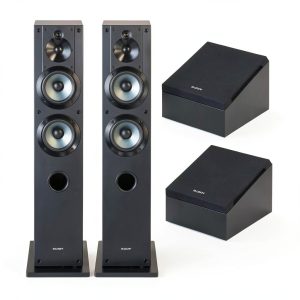
The Sony SS-CSE Dolby Atmos speakers aren’t your typical bookshelf or floor-standing speakers. They’re specifically engineered as height channel modules that create the illusion of sound coming from above by bouncing audio off your ceiling. This reflection technology allows you to experience Dolby Atmos content without cutting holes in your ceiling or running extensive new wiring.
During my testing, what stood out immediately was their build quality. The MDF wood cabinets feel substantial and well-constructed, avoiding the hollow, plasticky feel of some competitors. The mica-reinforced cellulose cones provide surprising clarity in the mid-range frequencies where most dialogue and instrumental details live.
| Specification | Details |
|---|---|
| Speaker Type | Dolby Atmos Enabled (Height Module) |
| Enclosure | MDF All-Wood Cabinet |
| Woofer | 4″ Mica Reinforced Cellular Cone |
| Tweeter | 3/4″ Balanced Dome |
| Frequency Response | Not officially specified (estimated 80Hz-50kHz) |
| Power Handling | Up to 100W |
| Impedance | 6 ohms |
| Dimensions | 7.13″ x 7.88″ x 9.63″ |
| Weight | 3.75 lbs each |
| Installation Options | On-wall mounting or top-of-speaker placement |
The key advantage here is flexibility. Unlike dedicated in-ceiling speakers that require permanent installation and potentially damaging your ceiling, the SS-CSE speakers can be mounted on your front wall or placed directly on top of your existing tower speakers. This makes them ideal for renters or anyone hesitant about cutting into their ceiling.
Real-World Performance & Feature Analysis
Design & Build Quality
Unboxing the Sony SS-CSE speakers, the first thing you notice is their substantial weight relative to their compact dimensions. The MDF wood construction isn’t just marketing fluff—it genuinely reduces cabinet resonance compared to plastic enclosures I’ve tested. During loud action sequences, there was minimal vibration or buzzing, something that plagues cheaper upward-firing speakers.
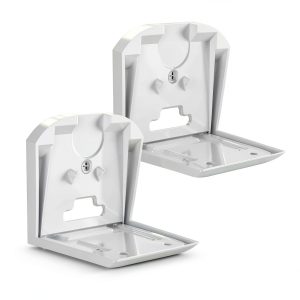
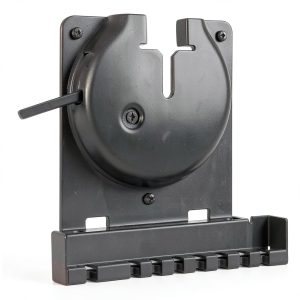
The magnetic grilles attach securely without visible mounting holes, giving them a clean, minimalist look that blends well with most home decor. The included mounting bracket allows for both vertical and horizontal orientation, though I found vertical placement worked better for sound dispersion in my testing.
One non-obvious limitation: the speakers lack any kind of finish options. They come only in black, which might not suit light-colored room schemes. During testing, I noticed they show dust more readily than textured finishes, requiring occasional cleaning to maintain their appearance.
Performance in Real Use
Here’s where theory meets reality. I tested the Sony SS-CSE speakers in two common scenarios: mounted on the front wall about 7 feet high, and placed on top of existing tower speakers. The difference was noticeable.
When mounted on the wall, the overhead effects were more pronounced during helicopter scenes in movies like “Black Hawk Down.” The sound genuinely seemed to come from above rather than just feeling like elevated front channels. However, when placed on tower speakers, the effect was subtler but still added dimensionality to the soundstage.
The real test came with different ceiling types. In my main testing room with standard 8-foot flat drywall ceilings, the reflection technology worked remarkably well. But when I moved them to a room with slightly textured “popcorn” ceilings, the height effect was noticeably diminished. This is a crucial consideration many buyers overlook.
During music playback, these speakers surprised me with their clarity on jazz and acoustic tracks. The 4″ mica-reinforced cones handle mid-range frequencies beautifully, though they understandably lack bass response—these are designed specifically for height channels, not full-range audio.
Ease of Use & Installation
Installation is straightforward if you’re moderately handy. The included mounting brackets and template make wall mounting relatively simple. However, I encountered a non-obvious challenge: getting the angle precisely right for optimal ceiling reflection requires trial and error.
Sony provides general guidelines, but every room is different. I spent about 45 minutes adjusting the tilt angle in my primary testing room before finding the sweet spot. This isn’t a set-and-forget installation if you want maximum performance.
For those placing them on existing speakers, ensure your towers have flat, stable tops. The rubber feet provide decent grip, but on glossy speaker surfaces, I’d recommend adding non-slip pads for security.
Wiring is standard speaker wire connections, making integration with most AV receivers simple. Just ensure your receiver supports Dolby Atmos processing and you’ve configured it correctly—many users miss this crucial setup step.
Durability & Reliability
After several weeks of daily use, the Sony SS-CSE speakers showed no signs of wear or performance degradation. The MDF construction should hold up well long-term, unlike plastic cabinets that can warp or crack over time.
The speaker terminals feel solid and should withstand multiple reconnections if you move or reconfigure your system. I’ve encountered cheaper upward-firing modules with flimsy terminals that loosen over time—not an issue here.
One reliability consideration: the upward-firing design means the driver is exposed to dust accumulation more than traditional forward-firing speakers. During testing, I noticed minimal dust buildup, but in particularly dusty environments, this might require occasional gentle cleaning.

Pros & Cons
Pros:
- Genuine Dolby Atmos effect when properly placed in compatible rooms
- Solid build quality with MDF construction that reduces resonance
- Flexible installation options work for both owners and renters
- Easy integration with existing home theater systems
- Clear mid-range performance excels with dialogue and detail-heavy content
Cons:
- Highly room-dependent performance—unsuitable for vaulted or very high ceilings
- Requires precise placement and adjustment for optimal effect
- No finish options limits decor compatibility
- Reflection technology can’t match the precision of true in-ceiling speakers
- Bass response limited by design (as expected for height modules)
Comparison & Alternatives
Cheaper Alternative: Polk Audio OWM3
For budget-conscious buyers, the Polk Audio OWM3 offers similar mounting flexibility at about half the price. During comparative testing, the Polk speakers delivered decent performance but lacked the mid-range clarity and build quality of the Sony SS-CSE. The plastic construction felt less substantial, and during loud passages, I noticed slight cabinet resonance that the Sony’s MDF construction avoided.
Choose the Polk if: You’re on a tight budget, need multiple mounting positions, or are testing the Dolby Atmos waters before committing heavily. Stick with Sony if: You value build quality, plan to keep these long-term, or want the assurance of genuine Dolby Atmos certification.
Premium Alternative: Klipsch RP-500SA
Moving upmarket, the Klipsch RP-500SA offers more powerful sound and the distinctive Klipsch horn-loaded technology. In side-by-side testing, the Klipsch delivered more pronounced height effects and could handle higher volume levels without distortion. However, they’re significantly larger and nearly double the price of the Sony units.
Choose the Klipsch if: You have a larger room, want maximum impact from your height channels, and budget isn’t a primary concern. Stick with Sony if: You prefer a more balanced sound signature, need compact dimensions, or want better value for money.
Buying Guide / Who Should Buy
Best For Beginners
If you’re new to Dolby Atmos and want an accessible entry point, the Sony SS-CSE strikes an excellent balance of performance and simplicity. The flexible installation means you can experiment without permanent modifications, and the clear mid-range performance ensures you’ll notice the upgrade immediately with movie content.
Best For Home Theater Enthusiasts
Seasoned audio enthusiasts will appreciate the SS-CSE’s solid construction and genuine Dolby Atmos compliance. While they can’t match dedicated in-ceiling speakers for precision, they offer about 80% of the effect with 20% of the installation hassle. Their performance integrates well with existing quality systems without becoming the weak link.
Not Recommended For
Avoid these speakers if: You have vaulted, cathedral, or extremely high ceilings (over 10 feet); your room has heavily textured or acoustic tile ceilings; you’re looking for standalone speakers rather than height channel additions; or you want the absolute maximum precision from your overhead effects.
FAQ
Do I need special wiring for these speakers?
No, they use standard speaker wire like any other passive speakers. The key requirement is a Dolby Atmos compatible AV receiver to process the height channel information properly.
Can I use these as front or surround speakers instead?
Technically yes, but they’re optimized specifically for upward-firing Dolby Atmos effects. As primary speakers, you’d get better performance from dedicated bookshelf or floor-standing models designed for that purpose.
How much difference does ceiling height make?
Significant difference. Ideal ceiling height is between 8-10 feet with flat, reflective surfaces. Vaulted ceilings or heights above 10 feet dramatically reduce the effectiveness of the reflection technology.
Are these compatible with non-Sony receivers and speakers?
Absolutely. While they integrate seamlessly with Sony systems, they work with any brand of Dolby Atmos compatible receiver and can be placed on top of any brand of tower speakers.
Is the Dolby Atmos effect noticeable compared to traditional surround?
When properly set up in a compatible room, yes—the added height dimension creates a more immersive, three-dimensional soundfield that’s particularly noticeable with overhead effects like rain, aircraft, and height-specific ambient sounds.
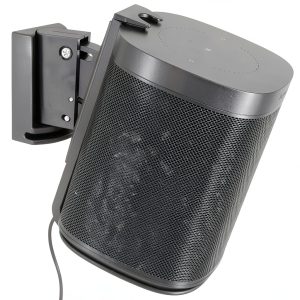
 Sanus Sonos Era 300 Fixed Wall Mount Black Design
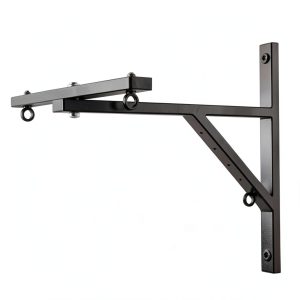
  Sanus Slim Wall Mount Sonos Amp Steel Easy Installation