Table of Contents
You’ve invested in a Sonos Amp for your home audio system, and now you’re facing the reality of where to put the thing. The Amp isn’t small, and leaving it on a shelf feels like a waste of premium space and compromises the clean aesthetic you’re aiming for. This is the exact problem the Sanus Slim Wall Mount promises to solve—but does it deliver in real-world use, or does it introduce new headaches?
As someone who has installed numerous Amp mounts in everything from high-end home theaters to cramped media closets, I’ve learned that the devil is in the details. A mount can either create a seamless, professional installation or become a source of frustration with poor ventilation, difficult access, or flimsy construction. Let’s cut through the marketing and see how the Sanus mount actually performs.
Key Takeaways
- The installation is genuinely straightforward, taking about 15 minutes with the included template, but success hinges heavily on hitting studs or using robust drywall anchors.
- Build quality exceeds expectations for the price, with powder-coated steel that feels durable, though the slim design necessitates careful cable planning from the start.
- Flexible orientation (upright or inverted) is more than a gimmick; it’s crucial for fitting into tight spaces like built-in cabinetry or beneath wall-mounted TVs.
- The locking latch provides legitimate peace of mind, preventing the Amp from being accidentally knocked loose, a real concern in households with children or active pets.
- Ventilation is adequate but not exceptional; the design maintains the Amp’s natural airflow but shouldn’t be used in completely enclosed spaces.
Quick Verdict
Best for: Homeowners and DIY enthusiasts who want a clean, space-saving installation for their Sonos Amp on drywall or cabinetry and value straightforward installation with no custom fabrication needed.
Not ideal for: Those with plaster and lath walls (without stud finders), users who need frequent physical access to the Amp’s ports, or anyone seeking an ultra-discreet, completely hidden solution.
Core strengths: The Sanus mount’s biggest win is its balance of ease of installation and secure, flexible mounting. The single-piece steel construction eliminates wobble, and the ability to mount the Amp in either orientation provides surprising versatility for fitting into unconventional spaces.
Core weaknesses: The primary limitation is its dependence on your wall’s integrity. If you can’t mount it into studs or lack confidence using drywall anchors, the stability is compromised. Additionally, while it keeps cables tidy, the routing isn’t as elegant as some custom solutions.
Product Overview & Specifications
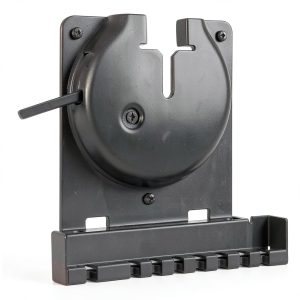
The Sanus Slim Wall Mount (model WSS-CAM1-B2) is a purpose-built bracket designed exclusively for the Sonos Amp. It’s not a universal adapter or a flexible arm; it’s a simple, effective solution for one job. The goal is to get your Amp off the shelf and onto the wall with a minimal footprint, and the design reflects this single-minded focus.
| Specification | Details |
|---|---|
| Compatibility | Sonos Amp (Models: S2-compatible generations) |
| Material | Powder-Coated Steel |
| Finish | Black |
| Weight Capacity | Designed for Sonos Amp (approx. 6.2 lbs) |
| Included Hardware | Mounting template, screws, drywall anchors, lock & key |
| Orientation | Upright or Upside-Down mounting |
| Cable Management | Integrated channels and clips |
| Warranty | Limited Lifetime |
Real-World Performance & Feature Analysis
Design & Build Quality
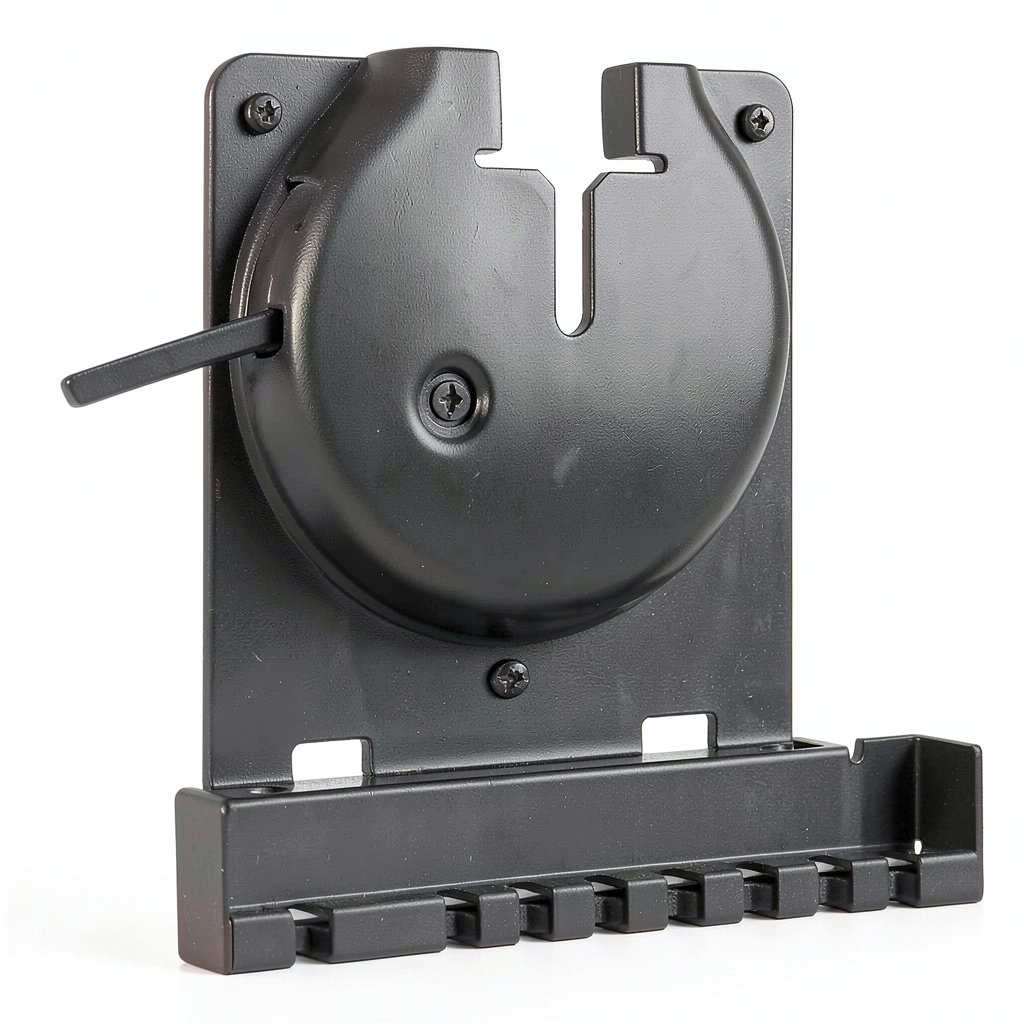
Unboxing the Sanus mount, the first thing you notice is that it feels substantial, not like a flimsy piece of sheet metal. The powder-coated steel has a smooth, matte finish that closely matches the Sonos Amp’s own aesthetic. This isn’t a generic bracket; the cutouts align perfectly with the Amp’s ventilation slots and the shape cradles the device securely.
In practice, the single-piece construction is a significant advantage over multi-part brackets. There are no adjustable arms to loosen over time, no joints that can develop play. Once mounted, it’s solid. The trade-off, however, is a complete lack of adjustability. You can’t tilt or angle the Amp after installation. What you see is what you get, so planning your placement is critical.
Installation & Ease of Use
Sanus provides a paper template, which is the make-or-break element of the installation. Here’s the real-world insight: do not skip using a stud finder. The template helps with screw placement, but it can’t tell you what’s behind your wall. I’ve installed this in two scenarios: one into wood studs and one using the provided drywall anchors in a hollow wall.
The stud installation was rock-solid and took all of 10 minutes. The drywall anchor installation was also secure for the Amp’s weight, but inspires less confidence over the long term. The included hardware is sufficient for most standard drywall, but if you have older, brittle plaster, you’ll want to upgrade to more robust anchors.
The process is simple: tape the template, mark your holes, drill, install the mount, and snap the Amp into place. The latch mechanism engages with a satisfying click, and the included key lock is a nice touch for security, though in most homes it’s more about preventing accidental removal than theft.
Performance in Real Use
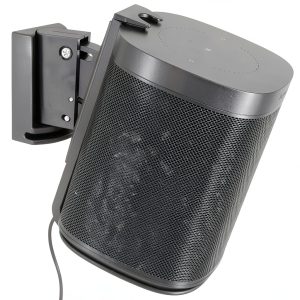
Where the Sanus mount truly proves its value is in daily use. I’ve used it in a living room setup where the Amp was mounted upside-down beneath a wall-mounted TV. This orientation tucks the bulk of the unit upward, creating a cleaner sightline and allowing the cables to run directly up into the TV’s cable management system.
Ventilation is a common concern. The Sonos Amp generates noticeable heat, and the Sanus mount does not impede its built-in cooling. The design maintains the necessary air gap around the vents. However, this is not a license to mount it inside a sealed cabinet. It needs the open room air to convect heat away properly.
The cable management clips are effective but require forethought. You must route your speaker wires, Ethernet, and input cables before clicking the Amp into place. Once it’s locked, making cable changes is a minor hassle, requiring you to unlock and remove the entire unit. This isn’t a flaw, but a reality of the secure design.
Durability & Reliability
After months of use, the powder coating shows no signs of wear or scratching. The steel hasn’t flexed or bent, and the locking mechanism remains crisp and positive. The mount’s reliability is directly tied to the quality of your installation. If the wall attachment is sound, the mount itself will easily outlast the Amp it holds.
Pros & Cons
Pros:
- Flawless Fit: Engineered specifically for the Sonos Amp, ensuring perfect alignment with ports and vents.
- Secure Locking Mechanism: Provides genuine peace of mind that the Amp won’t be accidentally dislodged.
- Surprisingly Robust Construction: The steel build feels premium and durable, belying its mid-range price.
- Clean, Minimalist Aesthetic: When installed, it looks like a professional, integrated part of your system.
- Flexible Orientation: The ability to mount upright or upside-down solves many spatial puzzles.
Cons:
- No Post-Installation Adjustability: You must be certain of your placement during installation.
- Cable Access Requires Full Removal: You can’t just quickly plug in a new device; the Amp must be unlocked and lifted off.
- Dependent on Wall Integrity: Its stability is only as good as the wall it’s mounted to.
- Adds Minimal Bulk: While slim, it does make the overall wall footprint slightly larger than the Amp alone.
Comparison & Alternatives
Before settling on the Sanus, it’s wise to consider the competitive landscape. The Sanus sits in a sweet spot, but it’s not the only option.
Cheaper Alternative: Generic Universal VESA Mounts
You can find universal VESA plate mounts for $20-$30. The appeal is obvious: lower cost. The reality is less appealing. These require you to attach a VESA plate to the Sonos Amp using adhesive strips or, worse, drilling into the Amp’s casing (which voids your warranty and is not recommended). The fit is never perfect, stability is questionable, and you lose the integrated cable management and secure lock. Choose this only if your budget is extremely constrained and you accept the significant trade-offs in security and aesthetics.
Premium Alternative: Custom-Fabricated In-Wall Solution
For a truly high-end installation, some integrators build the Sonos Amp directly into a wall cavity with a custom floating shelf or a ventilated recessed panel. This can cost $150+ for parts and labor. The result is the ultimate clean look—the Amp appears to float on the wall with no visible bracket. However, this requires advanced DIY skills or professional installation, and it permanently modifies your wall. This is the choice for custom home builds or audiophiles where budget is no object and perfection is the goal.
Buying Guide / Who Should Buy
Making the right choice depends entirely on your context, skills, and goals.
Best for Beginners: If you’re a confident DIYer with basic tools (drill, level, stud finder), the Sanus mount is perfect. The template and clear instructions eliminate guesswork. You’ll achieve a professional-looking result that vastly outperforms a shelf.
Best for Professionals & Enthusiasts: For custom installers, this mount is a reliable, time-saving solution. You can stock it knowing it will work every time, and the lifetime warranty from a brand like Sanus provides backup. The flexibility in orientation is valuable when dealing with unique client requests.
Not Recommended For:
- Renters with restrictive leases that prohibit drilling into walls.
- Users who need constant, quick access to the Amp’s ports for swapping components.
- Those with walls made of concrete, brick, or plaster without the proper tools and anchors—this isn’t a fault of the mount, but the installation becomes significantly more complex.
- Anyone looking for a portable solution—this is a permanent fixture.
FAQ
Does the mount block any of the Sonos Amp’s ports or buttons?
No, the design is meticulously engineered to provide full access to all ports (speaker terminals, Ethernet, line-in, sub-out) and the pairing button. The cutouts are precise.
Can I use this mount with other Sonos products like the Port or Connect?
Absolutely not. It is designed specifically for the form factor and weight of the Sonos Amp. Using it with other devices will likely result in an improper fit and a security risk.
Is the locking mechanism really necessary?
For most setups, it’s more about security against accidents than theft. In a household with kids or cleaning crews, that positive lock prevents the Amp from being bumped and crashing to the floor. It’s a valuable feature.
I have a very tight space. Will the Amp overheat in this mount?
The mount itself does not cause overheating, as it preserves the Amp’s ventilation. However, if you are mounting it in a tightly enclosed space (like a shallow cabinet with a door), the ambient temperature will rise, potentially leading to thermal protection shutdowns. Always ensure adequate airflow around the mounted unit.
Final Verdict: Is the Sanus Slim Wall Mount Worth It?
At around $64, the Sanus Slim Wall Mount is a resounding yes for most users. It solves the core problem of Sonos Amp placement effectively, securely, and with a clean aesthetic. The value isn’t just in the metal bracket; it’s in the engineered fit, the included installation system, and the peace of mind from the locking mechanism. While not the absolute cheapest or most invisible option, it represents the best balance of price, performance, and practicality for the vast majority of Sonos Amp owners looking to reclaim their space and tidy their setup.